

Is CompTIA Security+ Worth the Cost? A Practical Look at Skills, Jobs, and ROI

If you’re trying to break into cybersecurity, you’re probably weighing the same questions most people do: Will this certification help you get a cybersecurity job? Will the salary increase justify the investment? And most importantly, is CompTIA Security+ the right starting point for you?
Many people reach this decision while moving from a help desk or general IT position. Others arrive as complete beginners who want something recognized and structured. Security+ works because it provides a strong foundation without requiring years of prior experience. It teaches you how security functions in real environments and gives employers confidence that you can adapt quickly.
Before you commit, let’s break down what you really learn from CompTIA Security+, the types of jobs it leads to, the salary ranges you can expect, and whether the return on investment is worth it.
Core Skills and Industry Relevance of Security+
The balance and practicality of the SY0-701 content are its biggest strengths. You learn the fundamentals every security team relies on, including threat analysis, vulnerability identification, network security controls, risk management, and incident response workflows. Instead of memorizing definitions, you understand the reasoning behind security decisions.
You also learn the basics of governance and compliance. Even entry-level professionals are expected to understand policy requirements, access control expectations, and the logic behind risk assessments. That knowledge helps you be useful from the start.
Because Security+ is vendor-neutral, you learn principles that apply whether an organization uses Linux servers, Microsoft Active Directory, AWS, Google Workspace, or all of the above. That flexibility helps you fit into different environments without feeling lost.
Hiring managers also recognize CompTIA Security+ as a reliable indicator that you understand core security concepts. It’s commonly required or preferred for roles in security operations, early analysis work, and systems or network administration with a security focus. And because there are no rigid prerequisites, it remains one of the most accessible entry-level cybersecurity certifications available.
What It Costs to Get Certified
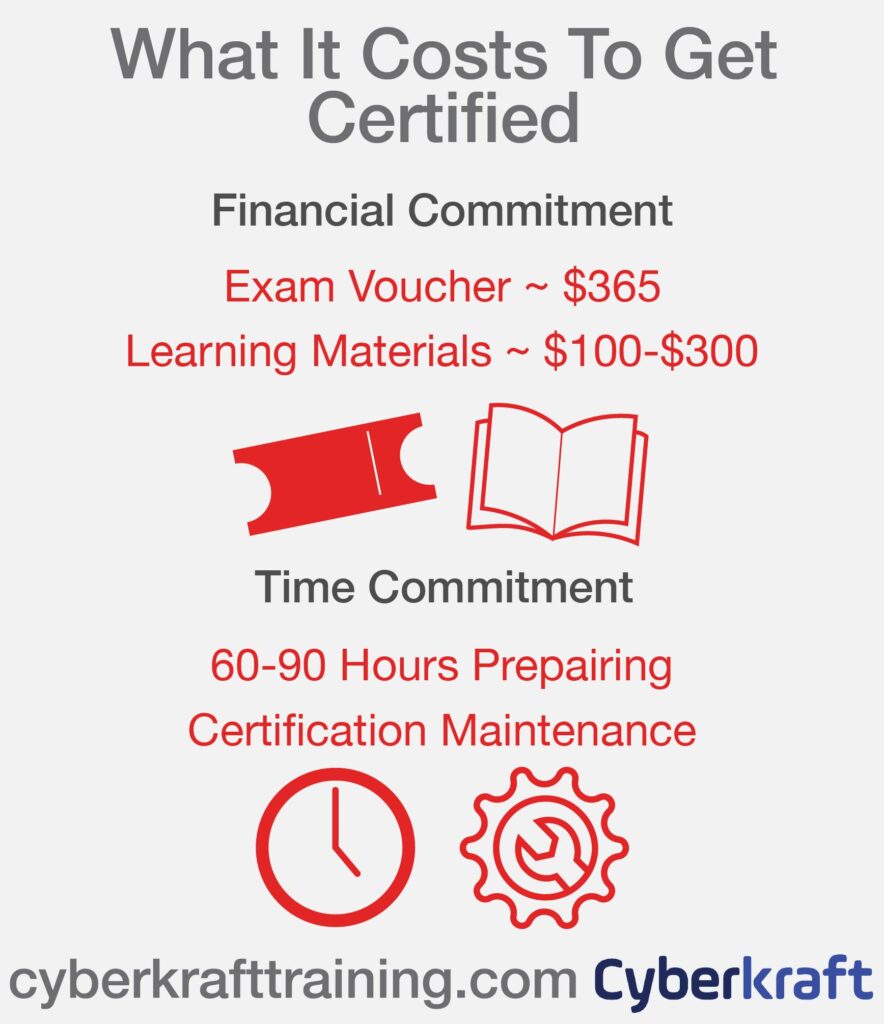
Security+ certification requires both time and financial commitment, and it helps to know exactly what you’re signing up for.
The Cyberkraft’s exam voucher costs around USD 365. Study guides, labs, and practice tests typically add another USD 100–300, depending on how structured you want your preparation to be. Guided courses like Cyberkraft’s CompTIA Security+ cost more upfront, but they save time if you prefer clear direction instead of self-study.
If you’re new to cybersecurity, expect to spend 60–90 hours preparing. Security+ includes performance-based questions that require applied problem-solving, which means you’ll need practice instead of memorization.
There’s also the maintenance of the Security+ certification. The Security+ certification is valid for three years. Renewal requires continuing education credits or a renewal fee. Retakes, if necessary, require purchasing a new voucher again.
It’s a meaningful investment, especially if you’re starting fresh. But the earning potential on the other side often offsets the cost quickly.
Security+ Job Opportunities and Expected Salaries
Security+ opens doors to roles where organizations actively need certified professionals who can handle monitoring, compliance, and basic engineering tasks.
Some of the most common Security+ jobs include the SOC Analyst role, where you’ll monitor alerts, examine suspicious activity, and escalate potential threats. You can earn somewhere around USD 65,000–100,000.
A Security Analyst role expands that scope by reviewing logs, identifying vulnerabilities, supporting incident response, and strengthening overall security posture. These usually pay USD 60,000–150,000.
Systems Administrators with security responsibilities manage patches, access control, and configuration reviews. Salaries typically range from USD 55,000–150,000.
If you prefer working closely with network infrastructure, go for Network Administrator positions. Here, you’ll focus on security, maintaining network devices, configuring firewalls, and supporting network monitoring. This often pays around USD 56,000–150,000.
For early-career professionals, security-aligned IT Support or IT Technician roles give beginners direct exposure to secure configurations and endpoint management. People in this role usually earn USD 33,000–97,000.
Because so many of these listings explicitly request Security+ candidates, the certification becomes a direct stepping stone into your first security-focused role.
Understanding the Security+ ROI
When you consider the total investment of about USD 600–700, the Security+ ROI becomes clear. Many people recover their costs within the first few months of working in a security role.
But the certification doesn’t guarantee success. Security+ is most valuable when paired with hands-on practice, home labs, or side projects. Employers want proof that you understand security concepts and can apply them.
ROI drops if you rely solely on the credential without building real-world skills. But for most people, the Security+ ROI is the strongest of all entry-level cybersecurity certifications.
How to Get the Most Value from Your Security+ Certification
Passing the exam is your first milestone. What you do next turns the certification into career momentum.
Start applying your knowledge right away. Volunteer for internal security tasks, help with access reviews, support patch schedules, or contribute to basic incident documentation. These small experiences build credibility and show initiative.
Document your progress. A simple GitHub repo or Notion page tracking your labs, tools, and practice scenarios is enough to demonstrate your growth. Even in cybersecurity, a visible portfolio gives you an advantage.
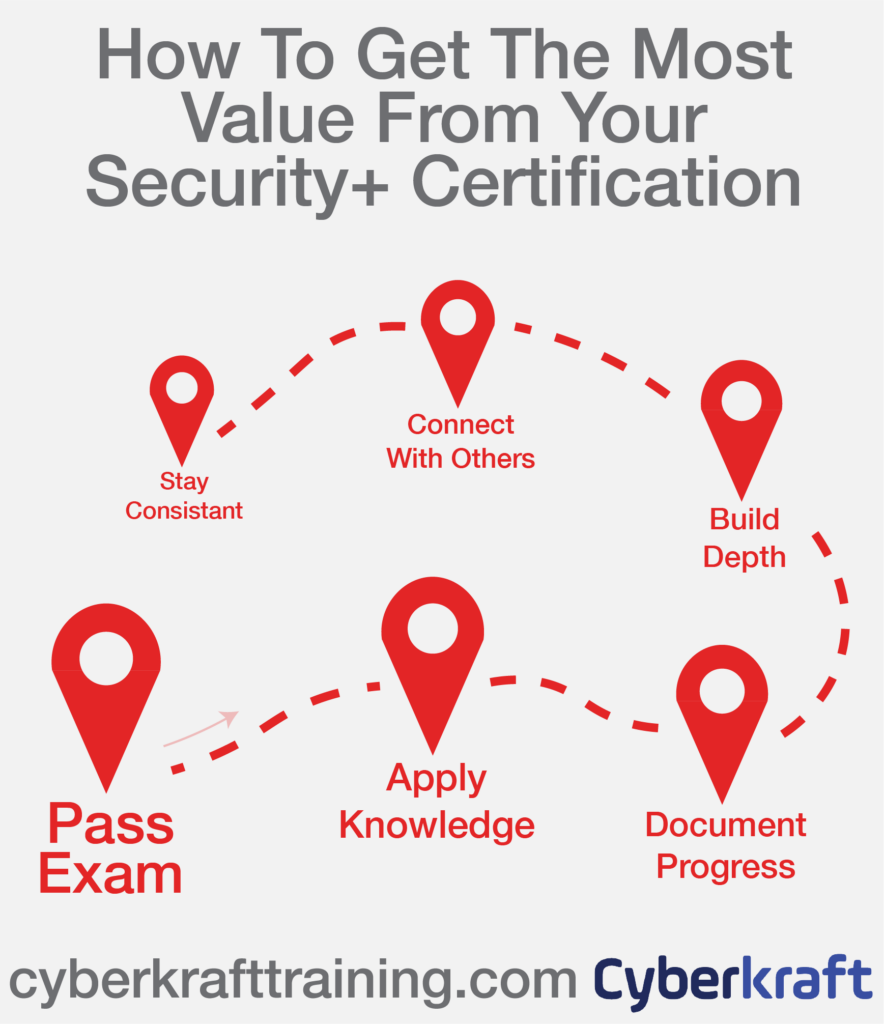
Then build depth in the areas that interest you most. If you enjoy SOC work, practice log analysis and detection basics. If cloud security interests you, explore IAM and cloud labs. Security+ gives you broad coverage; you build traction by specializing.
Be intentional with your network. Connect with professionals in the roles you want, join beginner-friendly cybersecurity groups, share your progress, and ask questions. Many first jobs come from conversations rather than applications.
Most importantly, stay consistent. Cybersecurity evolves fast, and your momentum comes from steady, regular learning. As you stack skills and projects, Security+ becomes real leverage instead of a line on your resume.
Why Security+ Is the Right First Step for Your Cybersecurity Career
If you want to break into cybersecurity without drowning in vendor-specific certifications or expensive degree programs, Security+ is your smartest starting point. It gives you a broad foundation, employer trust, and the credibility you need to get your first fundamental security role.
And if you want structured preparation, hands-on labs, and guidance from people who’ve helped thousands of students pass, Cyberkraft CompTIA Security+ is an excellent place to start. Their Security+ training helps you study efficiently, focus on what matters, and walk into the exam with confidence.
If you’re ready to build real momentum in your cybersecurity career, begin your Security+ prep and take the step that will open the first and most important door.


Responses